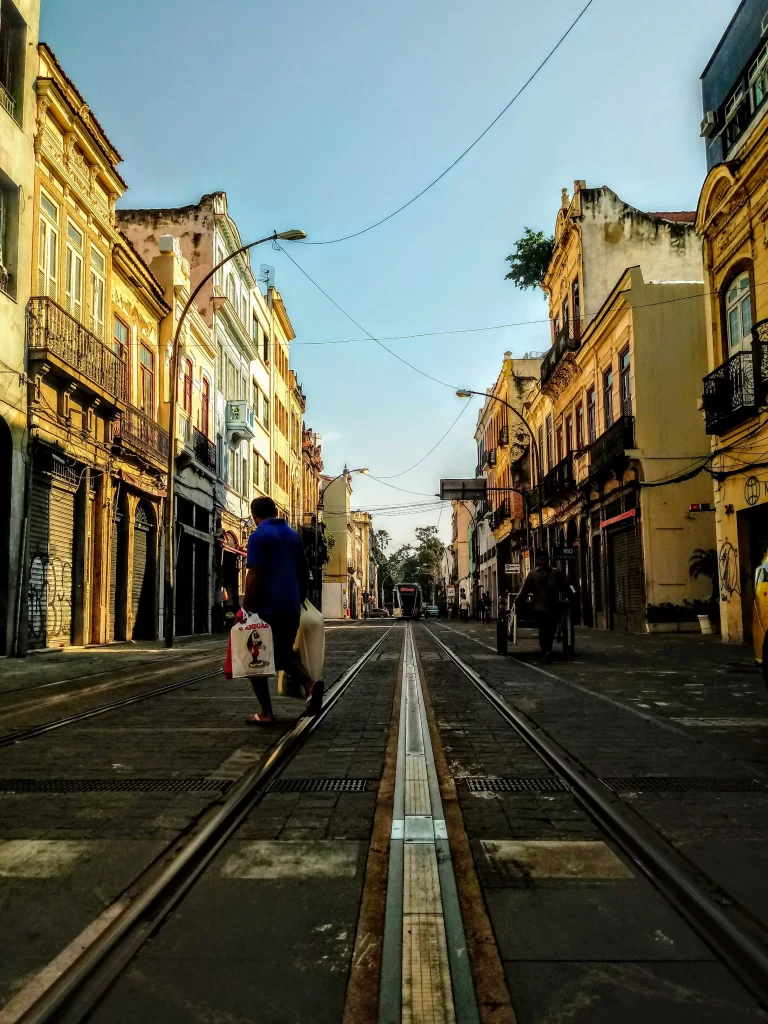
Journaled on Friday, 3rd of January 2025 | Santo Cristo, Rio de Janeiro, Brazil: 32 degrees, hot and sunny and slightly overcast.
It is Friday, and I am exhausted in a good way. This thing about holidays, something I have had minimal experience of over the last 30 years or so, is hard work.
Having a good time, enjoying yourself with lots and lots of pleasure, is very new to me, but it gives us a false sense of worth and security. While you’re not exactly making or building anything, you’re not really being that productive.
Don’t get me wrong, I am really enjoying my holiday and being with Julie. It really is a privileged time for me. I feel so privileged that I am feeling guilty, and I do not know if that is good or bad.
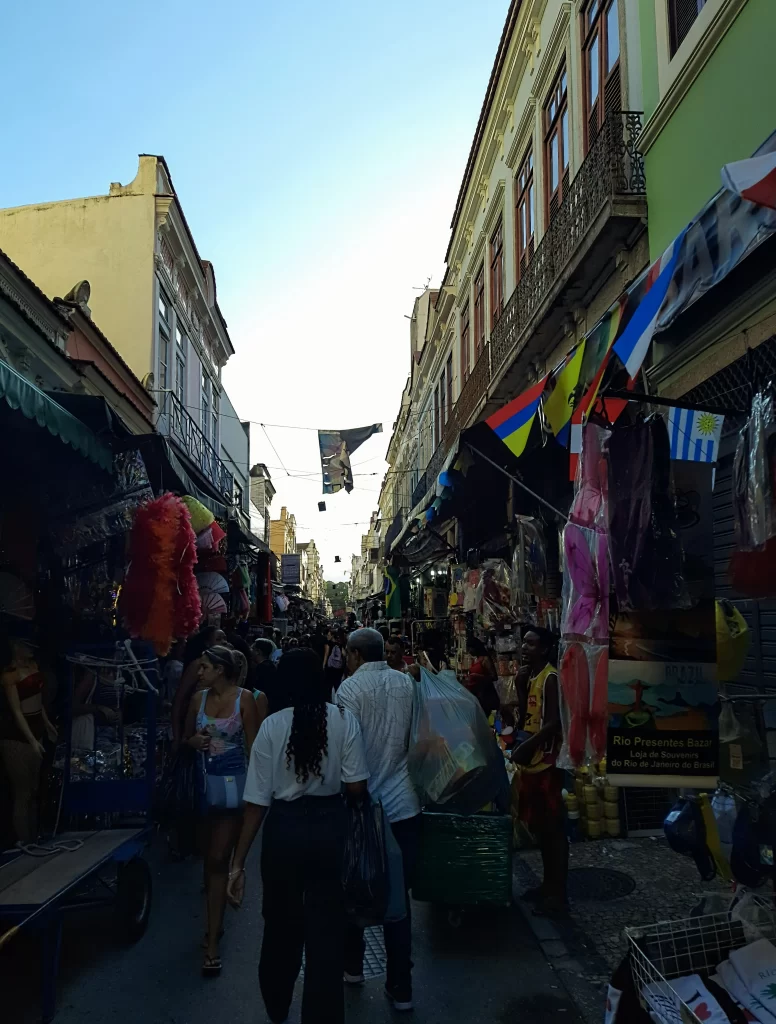
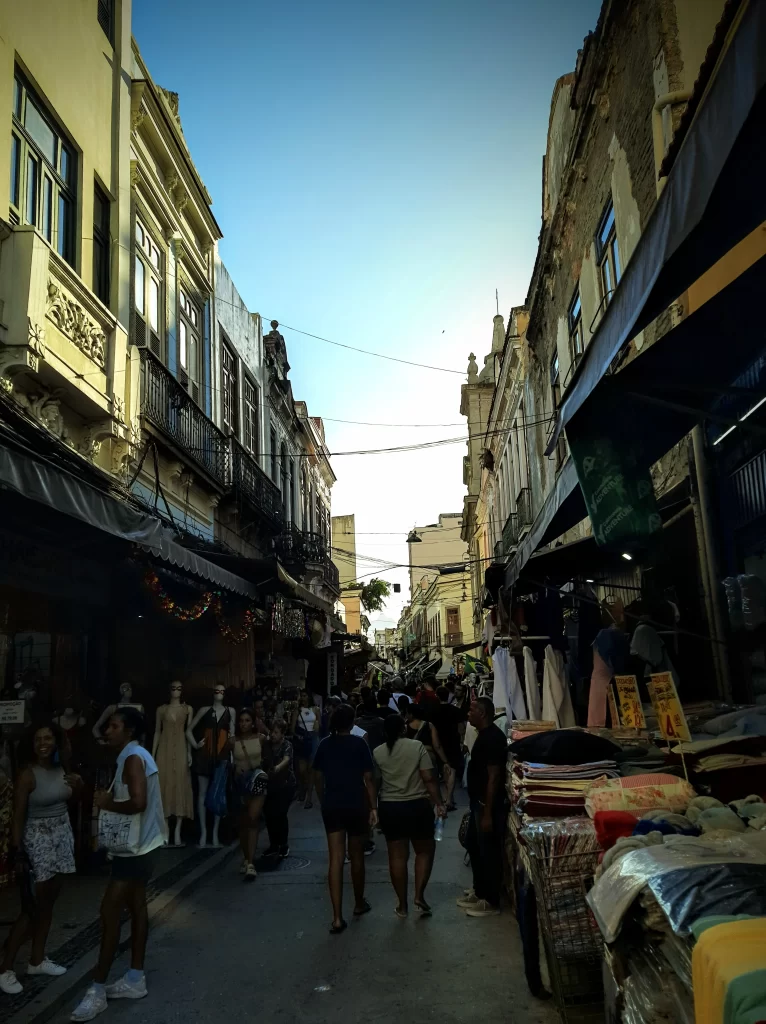
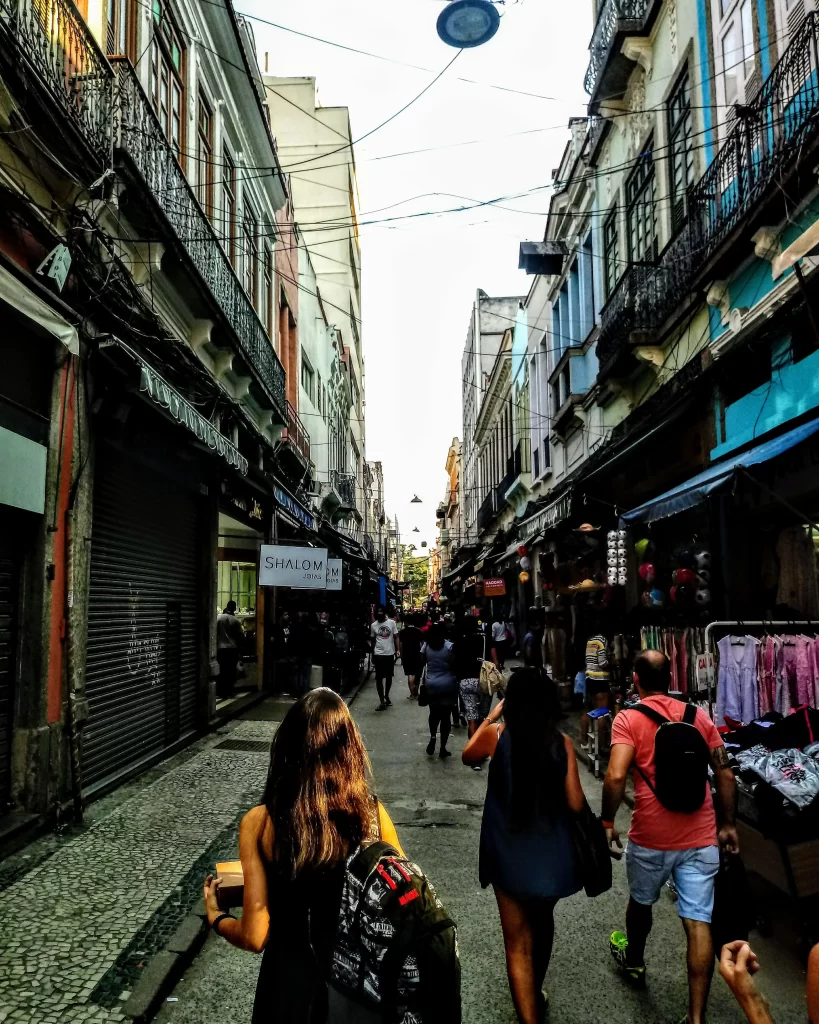
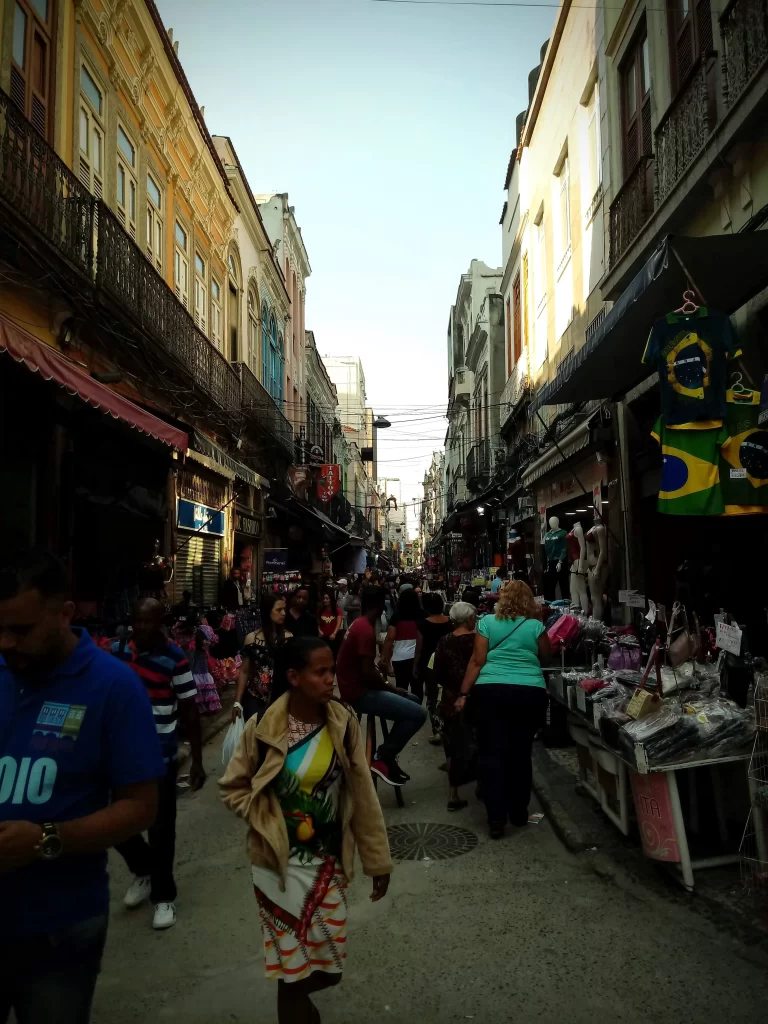
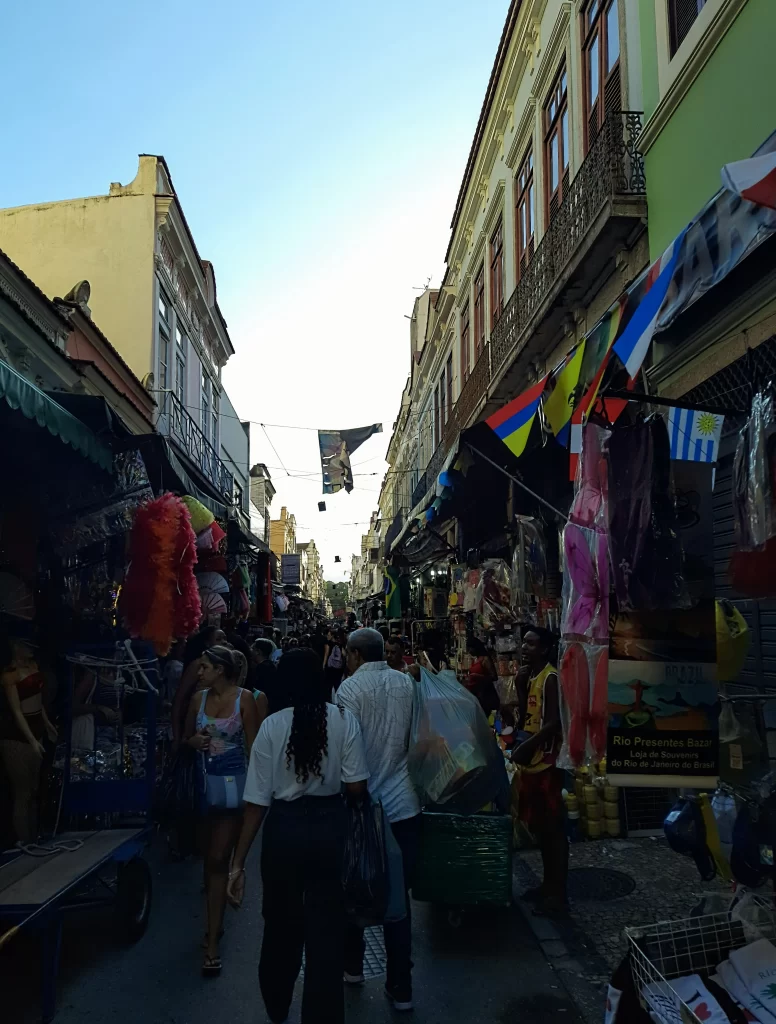
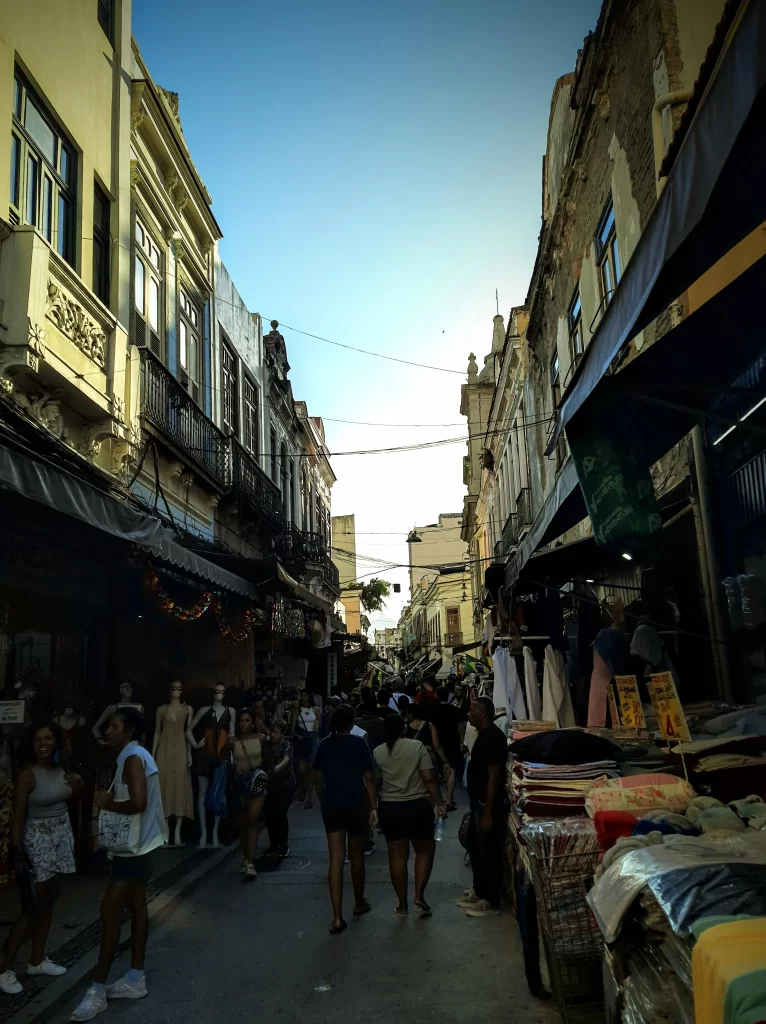
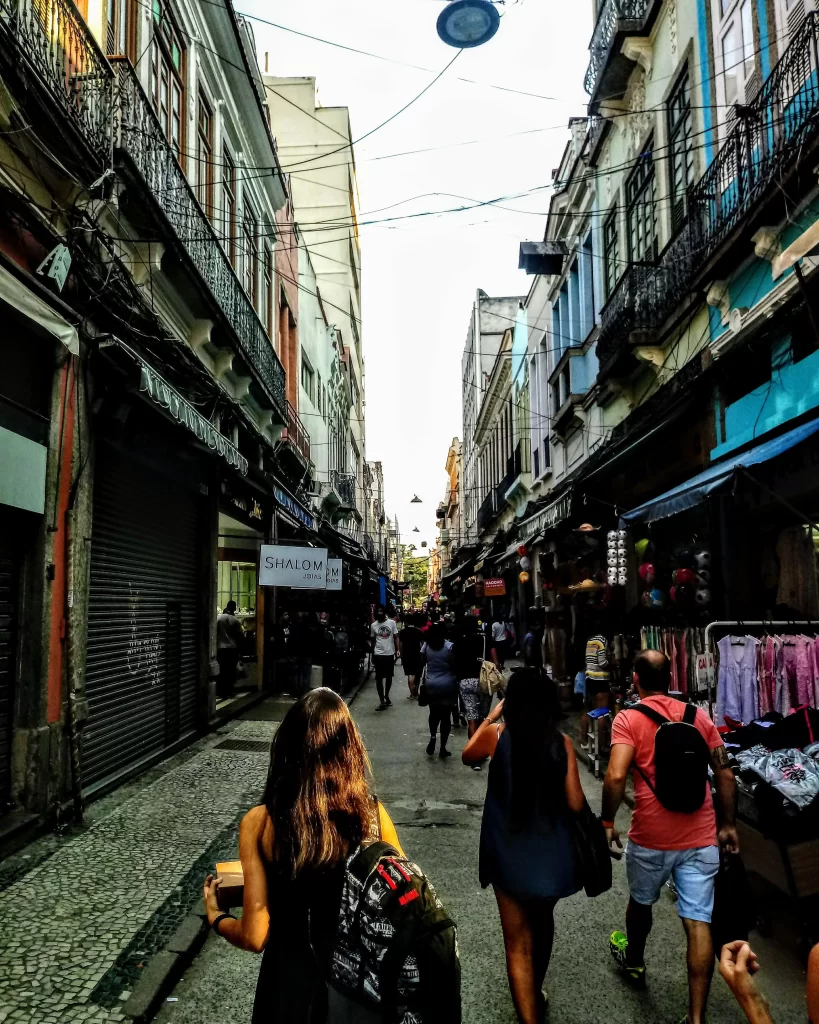
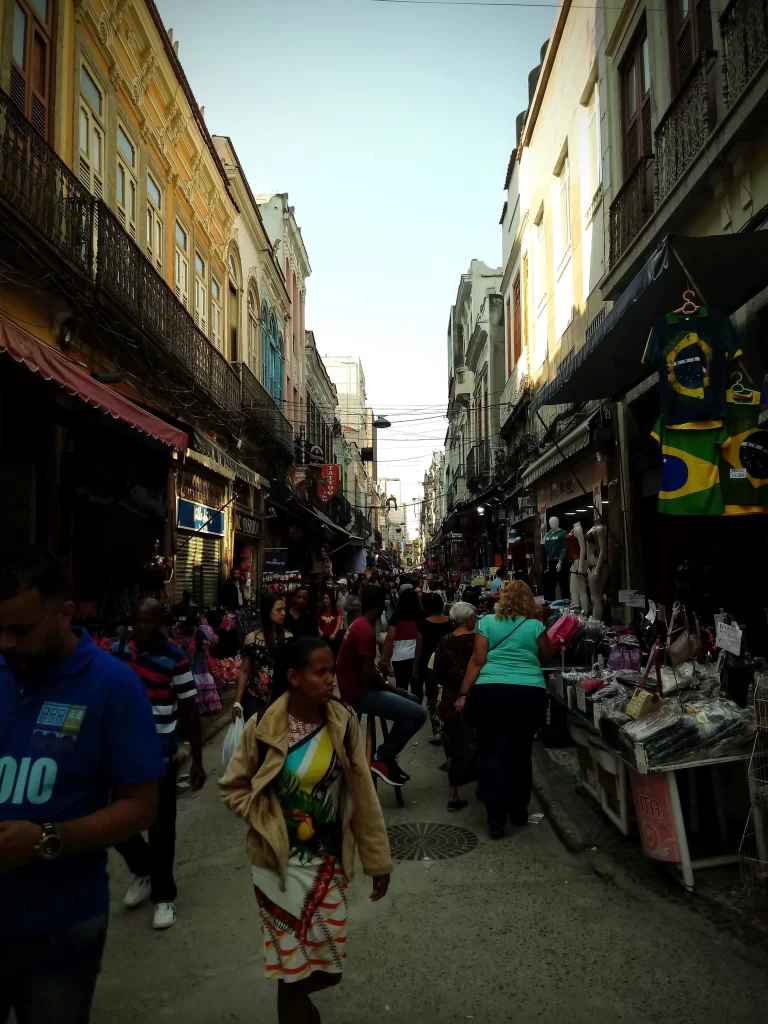
For some crazy reason, my mind went blank, and I decided to take Julie to Saara, Rio’s old commercial district. It is made up of two or three principal streets, the backbone of Saara, and a plethora of side streets that create a labyrinth of street shopping.
Saara is wall-to-wall in retail and wholesale trade, for the mainstream clothes, anything for the home, and the car parties. If you can imagine it, you find it in Saara.
When my daughters, Jessica and Yasmin, were very young, I would often take them there to buy whatever they wanted. Especially Yasmin, I would give her R$50 at the time, which was a lot of money then for a little girl, and tell her that with this money she could choose whatever she wanted.
Yasmin would love to go around the shops, especially the toy shops or the stationers specialising in drawing and painting materials, to see what she wanted and could buy.
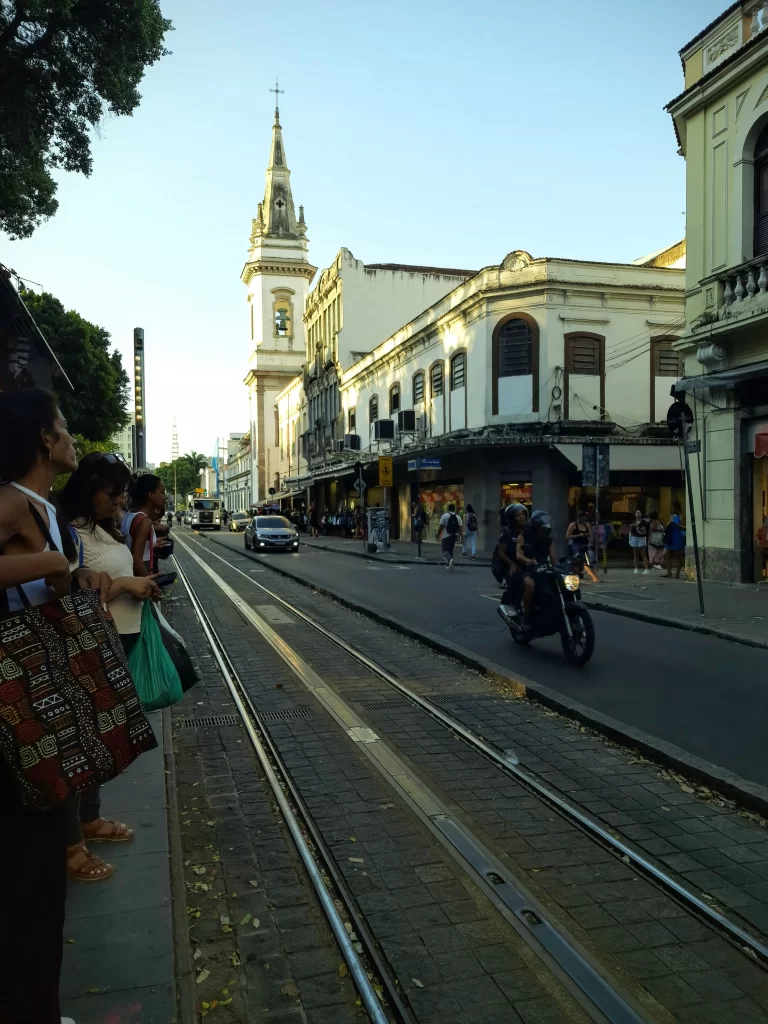
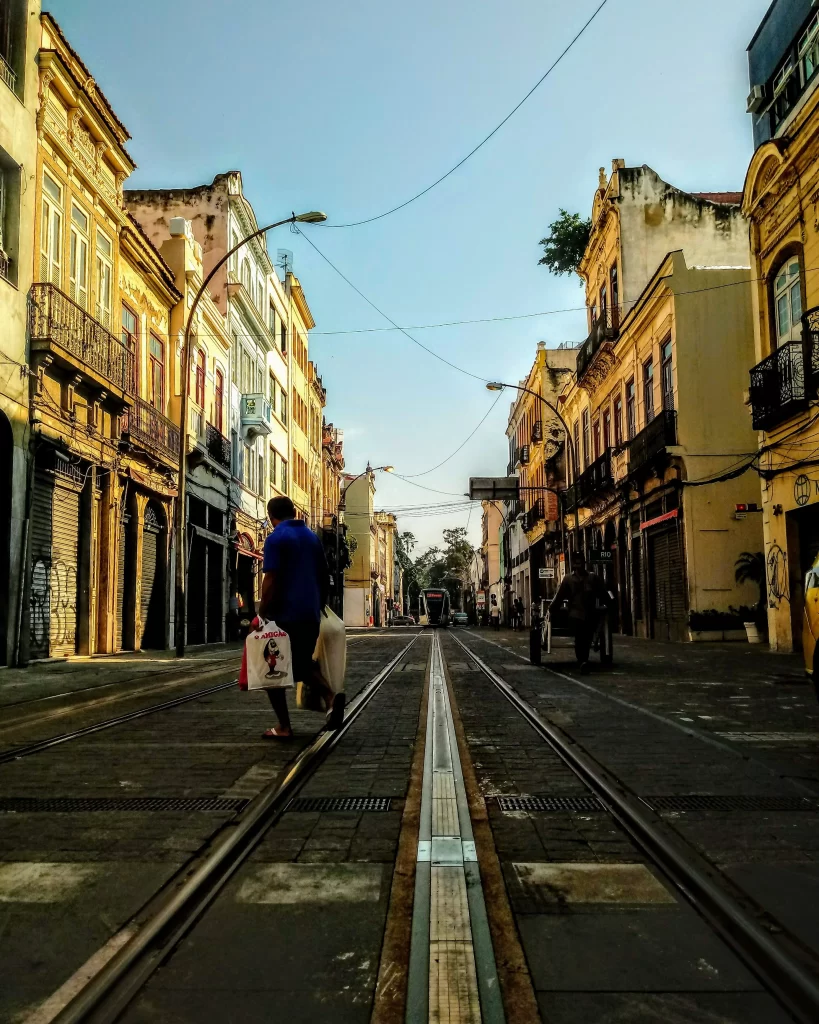
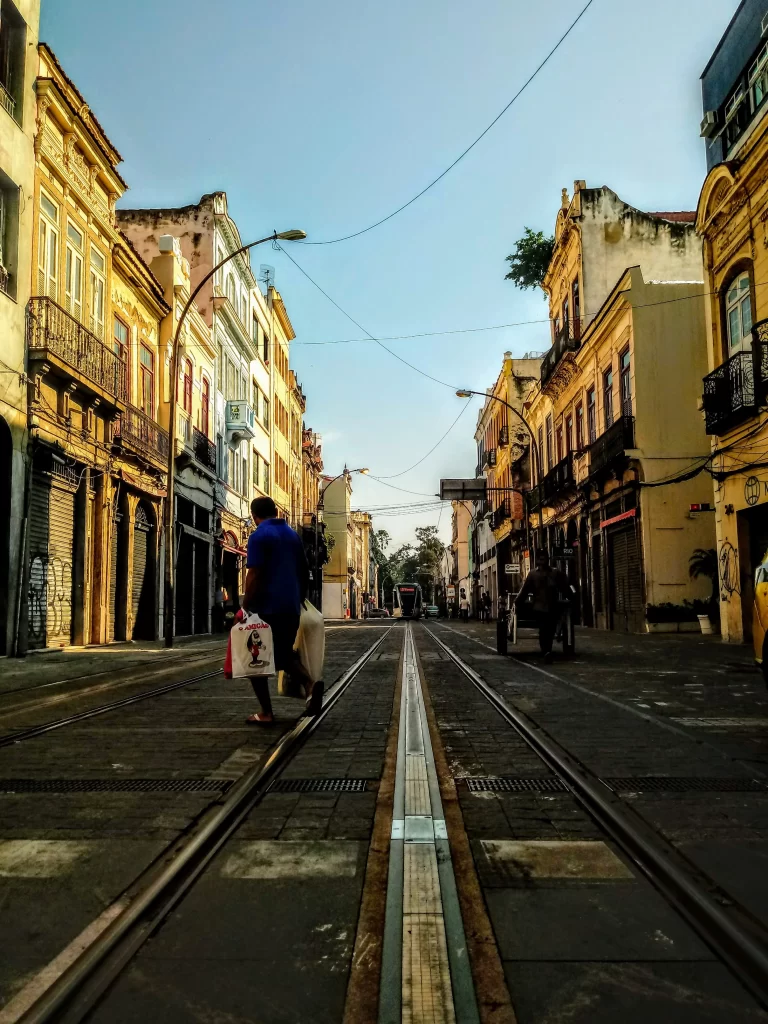
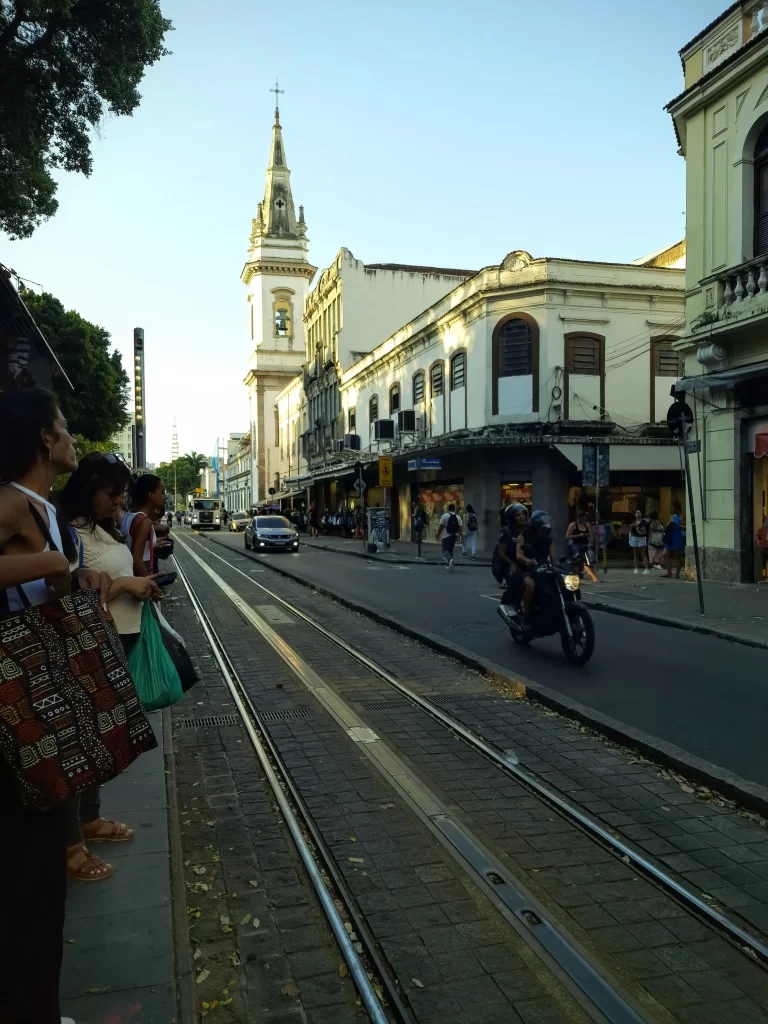
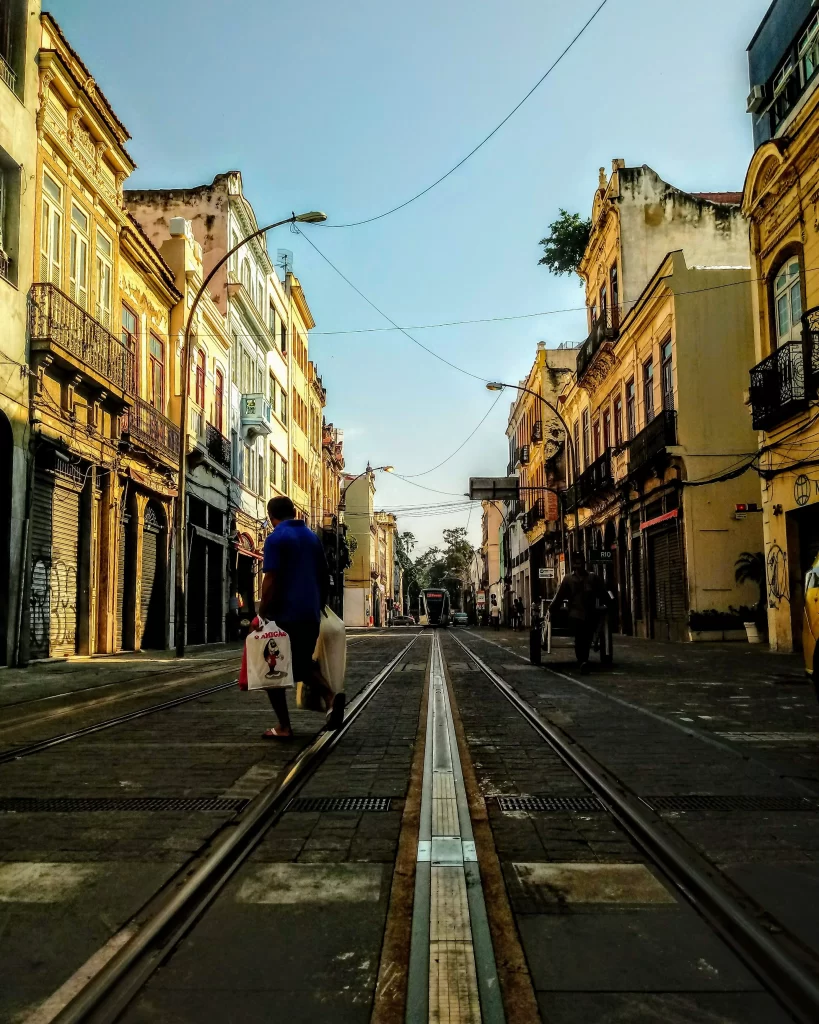
For Julie, it was the same. As soon as we left the VLT tram, she faced Saara and saw the street lined with shops to infinity, and, between the plethora of shoppers dipping in and out of each shop, it was an overdrive and an overdose of possibilities for her senses.
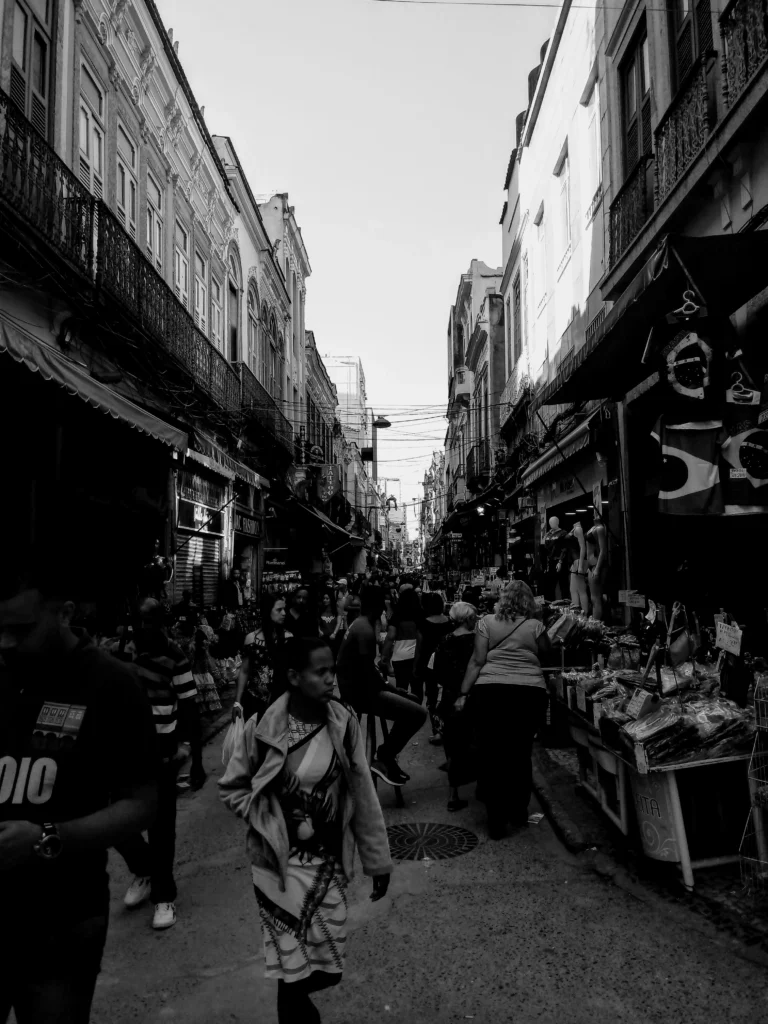
Any form of shopping, in general, really tires me, but Saara is hell on earth for me. Hot under the carioca sun, especially in the summer, cramped, sometimes smelly, and with a lot of confusion as so many people twist and turn in and out of the shops. But for the women, ladies, and girls of my life, it is heaven on earth.
Julie bought some clothes, mainly tops, after we had gone down one main street and come back on ourselves on the other main parallel street; I was completely done. It was getting on for lunchtime, and really, we had seen all that was necessary, at least for me, so it was time to go home.
We took the VLT tram back to Santo Cristo. Before going home, we stopped by the per kilo to have lunch. Even though it was early afternoon and the restaurant was only open for lunch, it was still open, and there was still a good variety of food to have a decent bite to eat.
At home, we rested, and a little later, we prepared to go out to Copacabana to meet Dona Regina.
Dona, Regina. A pupil of mine for a long time is a lady in her mid-80s who, in the past, was a ballerina with the municipal theatre of Rio and was once married to one of the wealthiest men in Brazil, who sadly committed suicide.
She later met and married Roberto, and I have deep admiration for both of them. I think Gina has been my pupil for almost 10 years. I had been teaching her classes for at least 3 or 4 years before the pandemic.
She’s an example of how we should reach old age and of the importance of listening to and learning from older people. They always have something good and positive to say, and a lesson is always hidden in their kind words, waiting to be discovered.
Over the past year or so, my teacher-pupil relationship has evolved into a friendship, and I visit her from time to time, especially when she is ill or recovering.
She invited Julie and me to go because I had told her about Julie while I was in England, so she was curious to meet her, and I think Julie was too.
However, our meeting, although very pleasant, was not without its challenges. I had bought flowers for Dona Regina, as I always do, and she liked them very much. She had made a small tray of appetisers and a lot, but a lot, of beer to wash them down. While we were talking, Dona Regina would bring one more can of beer for us, but for me, it was too much!
After an hour and a half of pleasantries, good conversation and a lot of beer, I said it was time to go. I knew that if I stayed, I would get drunk, really drunk, and if that happened, I would never hear the last of it from Julie. After two Saideiras: two for the road, we said our goodbyes and left, half drunk. What a night, and it hadn’t finished yet.
It was about 7:30, so I suggested we take a walk along the beachfront. It is only one block from Dona Regina’s building.
The promenade or walkway in front of the beach was crowded, with people walking up and down the central part. The kiosks were full of people drinking and eating, and there was live music in all of them, so music was in the air wherever we went.
We were walking towards Post 6, almost to Ipanema. Julie wanted us to sit on the beach, so we did. It was already dark, but since it is summer and still 30° at night, families and friends are on the beach as if it were day.
The only difference is that they can’t sunbathe, but going into the sea, playing with the ball, etc., and eating and drinking are just as they would be during the day.
We sat on the sand, looking out to sea. I think Julie couldn’t believe we were on Copacabana Beach at night. It was warm, and people around us were savouring the moment. It was safe. It was an existential, surreal, sublime moment for both of us.
How good is that!
I think we stayed on the beach for a little more than an hour. We went back to the Calçadao, the main pavement walkway in front of the beach, where everyone was walking past the kiosks. We cleaned the sand from our feet, put on our flip-flops, and went to the main street in Copacabana to catch the bus home.
In half an hour, we were home, ready for bed; what a day!
In bed by 10 p.m.
Thank you.
Thanks for reading this blog post. Please explore my other posts and share your thoughts in the comments section.
Richard