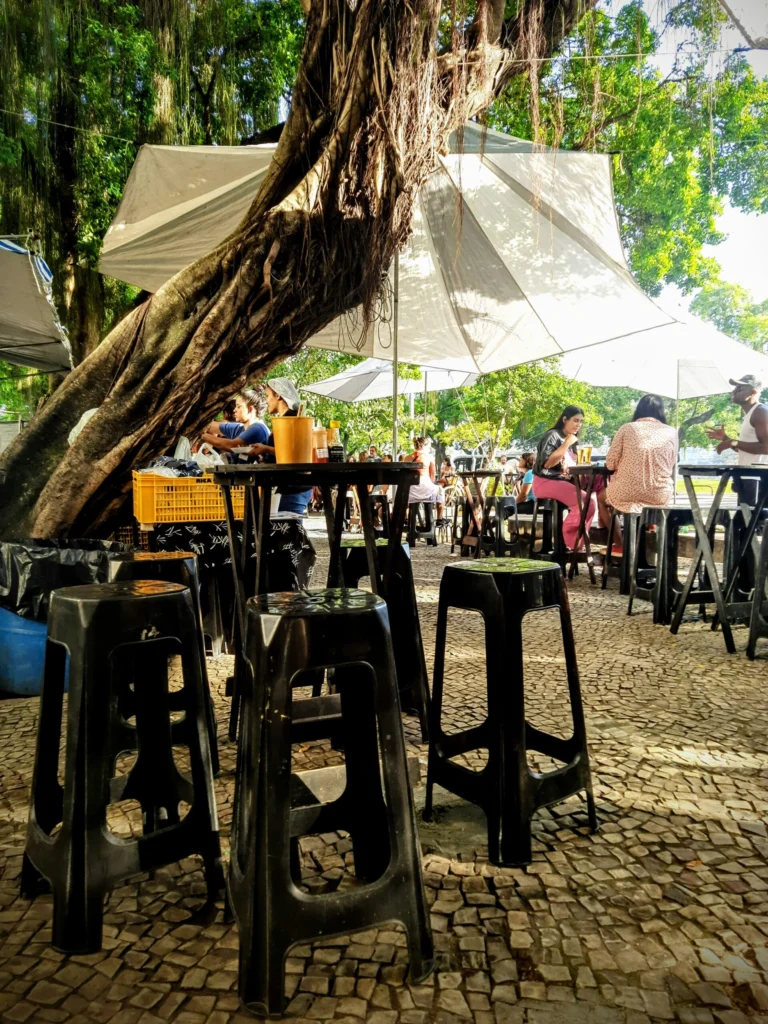
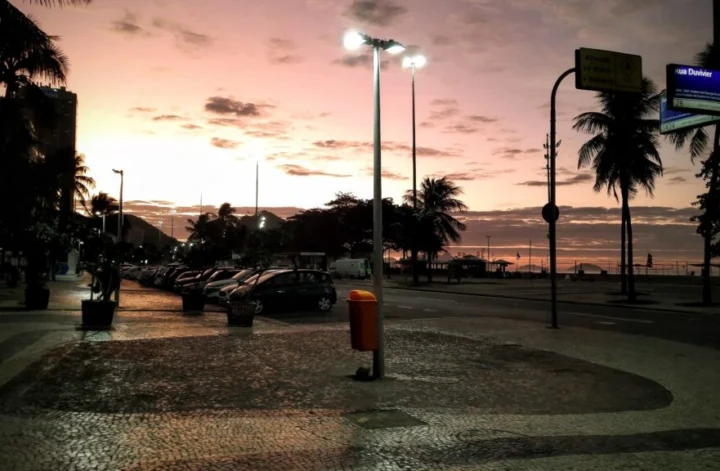
Journalled on Saturday, 1 February 2025 | Flamengo, Rio de Janeiro, Brazil: 32 degrees, hot, sunny and overcast.
It is the 1st of February, the start of a new month, although it will probably only get better financially after Carnival at the beginning of March.
Economically, in Brazil, the year only begins after Carnival, so I will have to weather earning less than I need for another month. It is not that I will be evicted for not paying my rent and bills; I will have enough to cover them, but it is very slow, and a cloaked inflation that the government is not telling us the truth about is eating away at my money and everybody else’s.
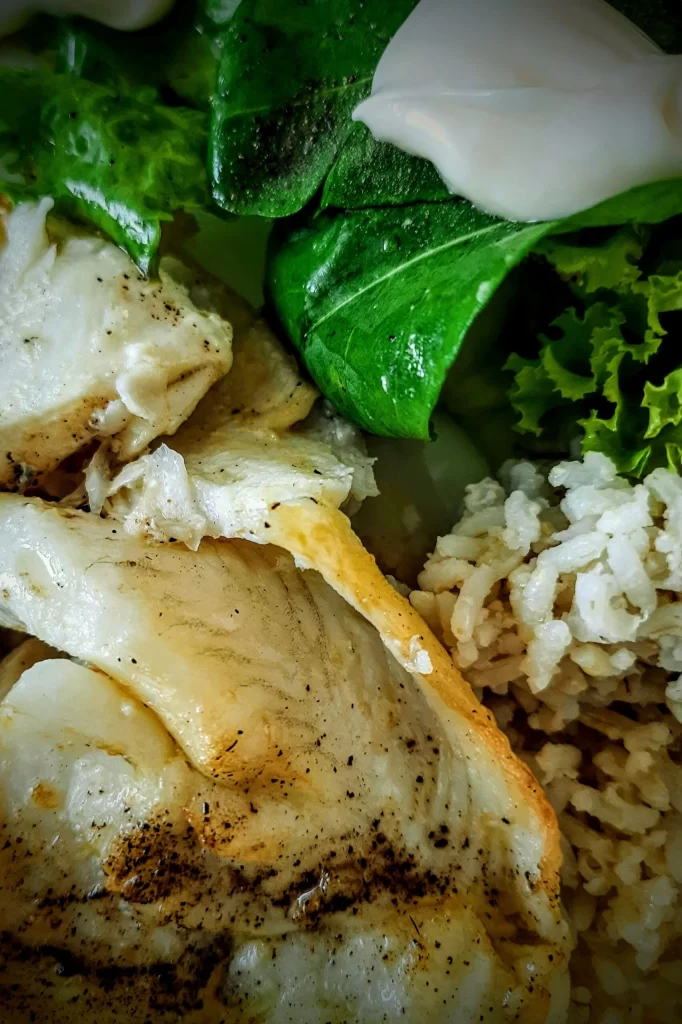
Food is extremely expensive. 100 Brazilian Reais, once considered a lot of money, especially for food, is now worth only a fraction of what it was worth in the past. Not so long ago, if I had spent more than 40 or 50 Reais at the supermarket, I would have thought that it was a lot, and I would have had at least two or three carrier bags of food to take home.
Now it is difficult to go to the supermarket and spend less than double the price. Basic life in Brazil is becoming increasingly expensive, to the point that the quality of our supermarket shopping is dropping at a frightening and perverse rate. As a result, the Brazilian people are becoming poorer than they have felt or lived in a long time.
I honestly do not know how restaurants will survive, as à la carte menus are becoming too expensive.
Even the traditional, typically simple restaurants serving typical Brazilian dishes, nothing sophisticated or at extortionate prices, are making it more and more difficult for people to go out for a simple meal with family and friends.
The more accessible buffet or per-kilo restaurants have always been popular, especially at lunchtime, as they offer a certain level of quality at a per-kilo price for workers seeking a quick, convenient lunch. Even so, they are struggling to survive amid such steep price increases.
And I don’t think it’s just the cost of food; it’s also taxation and inflation.
Regarding inflation, I have just discussed the exponential increase in prices since Lula became president in 2023. What is strange and not clear is how the numbers, the data, the percentages from the government depict, are telling a different story tht is not coherent to the reality that we are living in Brazil.
Since Lula entered office, the average time between some form of tax increase or the creation of a new tax has been 37 days, which is totally crazy and totally out of context for any country, especially a country such as Brazil.
Instead of the Robin Hood syndrome of stealing from the rich to give to the poor, it has been clear for quite a while that the opposite is true: Lula and his government are stealing from the poor to give to the rich.
However, it is important to understand that inflation hits the poor more than other classes, as the poor obviously have much less financial resources.
Their low income, which they depend on, becomes much less when inflation eats away at it. Because poor people have fewer resources, opportunities, and possibilities, what their government decides has a much greater and more direct impact on them and their lives than on the middle or upper classes.
One simple yet obvious reason to become wealthy is to be less dependent on external forces beyond your control. Especially today, economic freedom can allow you to move or set up a new home and business almost anywhere in the world, or to find a job almost anywhere.
If this is clearly understood, and we consider that Brazil has a population of poor people at almost 30% of its total population of approximately 220 million, this means that there are approximately 66 million people below the poverty line in Brazil, not forgetting the lower middle class and middle class people too who are struggling to pay all their bills to survive and keep their heads above water every month.
66 million people living below the poverty line is greater than the population of my home country, England, which at the moment is approximately 58 million. Thinking about it, that is quite frightening in the context of just one country, and that being Brazil.
Therefore, if we look at Lula’s government, a socialist government that has returned to power since January 2023, and if the essence of a socialist government is to look after its people, to give them food, a job and the minimum quality of life, there seems to be something perversely wrong.
Instead of people becoming richer, stronger and earning more money, it is clearly the opposite, with them becoming poorer, weaker, earning less or losing their jobs, and that is the point I want to make.
What is really happening to Brazil? For me, in short, it is perverse and disgusting, and it breaks my heart!
Be kind and be happy, and if you can’t be happy, still be kind, but not naïve!
In bed by 10 p.m.
Thank you.
Thanks for reading this blog post. Please explore my other posts and share your thoughts in the comments section.
Richard