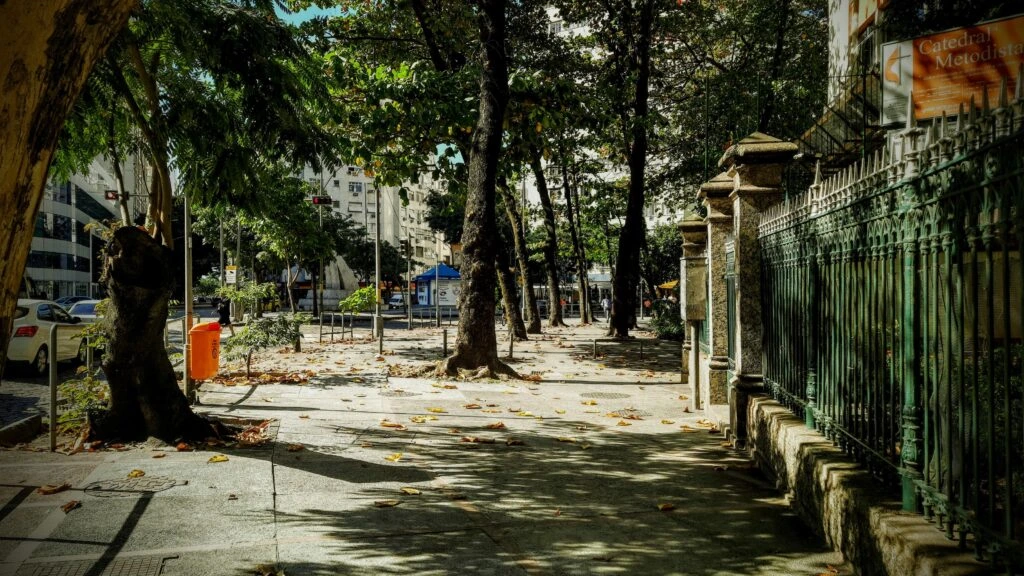
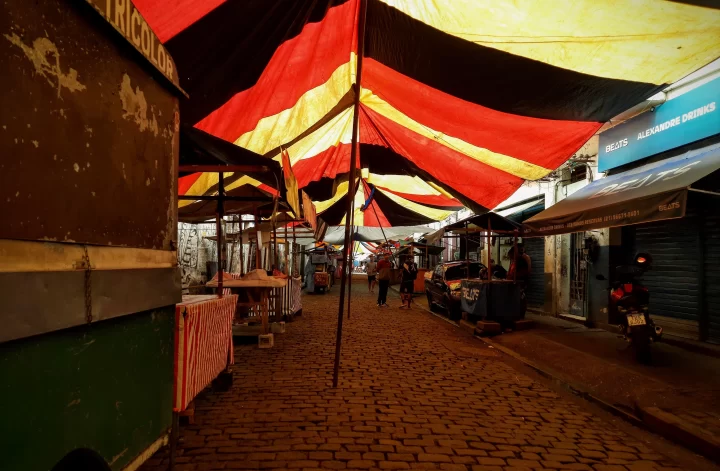
Journalled on Saturday, 14 October 2023 | Flamengo, Rio de Janeiro: 21 degrees, cool, overcast and rainy.
It has been raining nonstop, so it is not easy to do anything exciting.
Instead, I have been working on my computer, correcting past posts I was unsatisfied with. I still have a few left to revise. This process involves reading through the posts, and if I find any content that I do not like or that seems unclear, I rewrite it. Essentially, I want my posts to be easy to read; otherwise, they can be boring, and readers may struggle to understand my message.
I am also in the process of digitising my first diary, which is just a simple pocketbook. When I started journaling, I knew this first diary would be a test run, and it has served that purpose. I plan to begin on my second diary, which is more serious and substantial, written in a notebook rather than a tiny pocketbook.
Am I happy with my blog?
Absolutely. After putting in several months of work, I feel very content. However, I still have much to learn about writing, running, and managing a blog. Maintaining a blog today is much more complex than in the past, and I know there is still so much to grasp. Despite all of this, I am proud of myself for learning how to create and operate a blog from scratch.
I genuinely believe we can achieve whatever we desire; it simply requires putting our minds to it. The obstacles, problems, and setbacks we face are all part of the journey. While the potential rewards or destinations are significant, the journey itself is even more important.
On a different note, yesterday, I wrote about Brazil, specifically focusing on the civil service and the government. There were several points I wanted to address, but it would have been too much for a single post.
My theory regarding corruption in Brazil stems from my experiences working with large government agencies that later became involved in fraud scandals, including some of my former students.
Here is what I would like to convey: Brazil has been built by immigrants from diverse backgrounds over the past 100 or 200 years. Brazil is a mongrel race, like America. Nowadays, the world is generally a mix of different races and a melting pot of cultures.
However, in the past, many immigrant colonies were formed in Brazil: Italians, Germans, Japanese, Africans brought due to slavery, and many other colonies from other nations.
My theory is that the first-generation immigrants and refugees who came to Brazil in search of a better life, fleeing from wars, persecution, and other hardships, faced significant challenges.
In any country, immigrants are often regarded as belonging to a lower socio-economic class, and to survive, they typically have to engage in heavy labour. This work usually took place in the interior of Brazil, particularly on farms or similar settings.
Despite facing hardships, these immigrants eventually married and had children. The second generation often struggled with the challenges of being part of an immigrant family. They witnessed and felt the sacrifices their families made to survive, carrying the weight of traumatic experiences and mental scars.
Despite facing numerous difficulties and making enormous family sacrifices, some of these second or even third-generation immigrants managed to gain an education. They graduated and subsequently took entrance exams to enter the Brazilian civil service.
Many passed these exams, and for the first time in their lives, as well as in the lives of their families, they experienced a certain level of financial stability after enduring all the heartache, sacrifice, and suffering. This was a game-changer. Suddenly, the family had a level of stability it had never experienced before.
As the years passed, some of these civil servants, originally from immigrant families, eventually reached high positions in the government. Because of their elevated status, they became exposed to unique situations.
If they accepted a specific contract, they would receive money under the table. Whether this contract was beneficial or detrimental to the country was unimportant. What mattered more were the years of hardship and sacrifice that their families had endured, along with the mental scars that continue to affect these individuals both consciously and subconsciously to this day.
In this bribery situation, it is crucial to consider whether it may not align with Brazil’s or taxpayers’ interests. Instead, it often reflects the interests of those in power and of those in specific positions who receive bribes. This act can potentially secure a better future for their families and future generations.
The decision to accept such a bribe can be influenced by the consequences and experiences that a person had faced in the past and still consciously or unconsciously carries those traumas.
The second observation is about the mentality of a child who steals a sweet from a corner shop. When a child robs a sweet, and nobody notices or catches them, that child, in their youthful naivety, is waiting for a reaction, a slap on the back of the hand for doing something wrong, a punishment. However, when that punishment does not come, the child is left unsure of what is right or wrong.
Perhaps the child knows it is wrong but still waits for a reaction. When that reaction does not come, it creates a form of negative validation. The absence of punishment suggests that it is acceptable to steal. If they can get away with it once, they feel they can do it again.
Brazil has a historical reputation for impunity, especially concerning white-collar crimes committed by those with money, such as businesspeople, industrialists, and, more specifically, politicians. Consider a person from an immigrant family who studied hard, graduated, and succeeded in entering the Brazilian civil service, eventually attaining a high government position.
This situation reveals the character of such individuals, who face a choice: either accept a corrupt contract that launders money for their private interests rather than for the country’s welfare and its future growth and development for all to enjoy.
This leads to the conclusion that, as with many things in life, if someone engages in such actions once, they are likely to do so again. The risk increases each time, and the potential losses can become severe and staggering.
Brazil has suffered for many years from a culture of impunity. Corrupt politicians and civil servants have exploited the country and its resources. This issue is so widespread that everyone knows it exists. Often, there is a sad excuse for acceptance.
“We know that person is corrupt, but at least they’re getting work done or completing a project.” This attitude contrasts sharply with the numerous projects that never get finished, which were used to divert funds and instead become derelict trophies of Brazilian corruption, mismanagement, and greed.
With the return of Lula’s government, Brazil has reverted to a state in which corruption exists at all levels, from the president down to local council members.
It is endemic and rampant, much like an uncontrollable plague of rats that has become so big that nobody can stop it. No country can progress when so much is stolen every hour of every day.
A famous Brazilian journalist once commented on the situation, highlighting the visible effects of corruption throughout the country. What remains in the streets are merely the remnants of what corruption has pillaged and taken away.
As you walk through the streets, you can see the impact of this corruption, which has stripped away much that is good. It is a deplorable and disheartening sight, and I genuinely do not know where this will ultimately lead.
Here are my two observations or theories, which coincide with each other, regarding Brazil and why it is in this situation today.
- First, the consequences of the sacrifices immigrant families made upon arriving in Brazil led to the need to steal to secure a better life for themselves and their families in the future, especially in a country like Brazil.
- The second is the childlike mentality of impunity: when someone does something wrong, they instinctively expect to be punished. When that punishment does not come, they feel free to repeat the behaviour again and again until the country is bled dry. Human nature!
Be kind and be happy, and if you can’t be happy, still be kind, but not naïve!
In bed by 11 p.m.
Thank you.
Thanks for reading this blog post. Please explore my other posts and share your thoughts in the comments section.
Richard