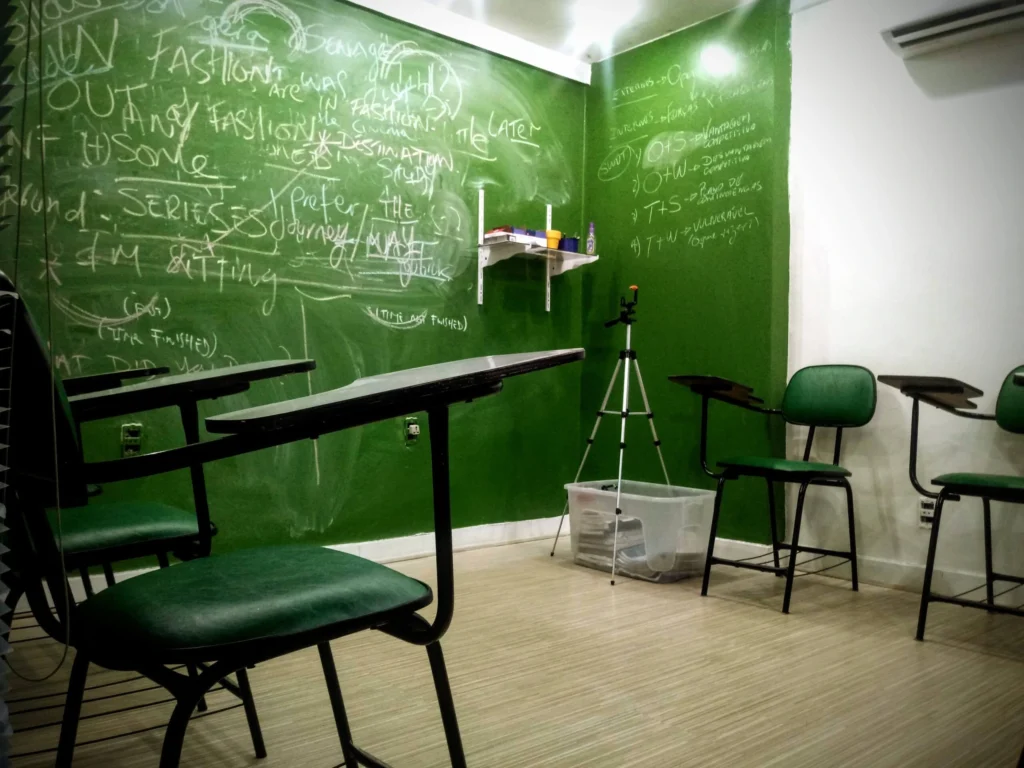
Journalled on Thursday, 1st of June 2023 | Flamengo, Rio de Janeiro: 25 degrees, sunny and slightly overcast.
Thursday, the 1st of June, May closes, and June opens. Summing up May, I taught 201 classes.
To do so many classes, all at the same elevated level, and to keep that level of quality all the time is not easy, but I can do it. I have based my classes on three specific pillars:
Quality:
As in English knowledge and the teacher’s didactic performance, a teacher needs to know well what he or she is teaching and how to complement one subject with another, as they are often related and this is proactive for the pupil. The teacher must know how to pass on his knowledge to the pupil.
It is not just a question of understanding a subject; he must facilitate the learning so that the pupil can absorb such knowledge, usually in a more simplified way. The teacher also needs parallel flexibility so that, while teaching a class, he or she monitors what is being produced and said, and how that content can be further developed or used more effectively for the pupils.
Entertainment:
The class must be entertaining for the pupils. It has to be fun and interesting so that the pupil retains as much content as possible from the teacher. Nobody pays attention when something is boring, but when it is interesting, we all pay attention, take part, retain it, and use it. Something interesting or enjoyable sparks curiosity, which in turn leads to retention.
The ability to make any class interesting depends significantly on the subject, the teacher, and the pupil or pupils. I am naturally relaxed. I am also English, and the English are famous for their black, dry, ironic sense of humour. I use humour a lot in my classes, as it is an excellent tool for tuition.
However, I have to be careful. There is a fine line between what is appropriate and inappropriate in a classroom, and it should never be crossed to avoid causing discomfort for the students. The teacher needs to have a sense of understanding and control over his craft. He or she must know the limit, the line and what can or cannot be said or done.
This is an art that few know. And finally, about this, do not, but never mix things. Never come on to a pupil, never have a relationship with a pupil, never; it does not work and almost always ends in disaster. Sometimes, a teacher has a false sense of righteousness, that he has more fame and attraction than he really has; an inflated ego is one of your own worst enemies. It is a false bubble that can burst at any time, usually when you least expect it!
Reliability:
Yes, reliability; a good teacher has to be reliable, which means if somebody pays him, he or she has to give the classes, no matter what. The teacher has to be there for the pupil or pupils for rain, snow, earthquakes, snowstorms, etc. I have lost count of the number of unreliable teachers I have encountered during my twenty or so years of teaching.
If you are a reliable teacher, you should be able to take all the pupils’ arguments into account. Whether the classes are good or not is a separate discussion; however, failing to deliver classes promptly harms the teacher-pupil relationship. A classic example is that a pupil can cancel a class because he or she is paying; however, if a teacher regularly cancels and the reason does not matter, the pupil will give up.
These are the three pillars I use for teaching classes: quality, entertainment, and reliability. Because of this, I have survived for more than twenty years in Brazil, teaching in a fickle market and country while supporting two daughters and a family.
It is also important to say that, like many things in life, teaching classes is a two-way street. Sometimes, a pupil forgets this because they think that, because they are paying, they have the right to do whatever they want, but they do not!!!
If the teacher is bulletproof, he can establish limits that are sometimes a shock, or literally an earthquake, for the pupil.
I have decided on a few occasions to stop teaching a pupil who, for some reason, is affecting my ability to teach. The classes are no longer helpful for the pupil, or the pupil is not valuing or taking the classes seriously.
If I believe the pupil is toxic, disrespectful, or otherwise complicated, I have had to decide to terminate the classes. Usually, when this happens, it is a big shock to the pupil, especially when the pupil thinks the teacher is entirely dependent on what they pay. In some cases, the pupil becomes completely indignant, but that is the way and sometimes, unfortunately, life is a bitch!!!
So, it was a day of classes, preparing for the beginning of the month, working and in the evening, going to Yasmin’s school for parents’ evening. We reserved two ten-minute appointments with the Portuguese and Maths teachers at seven and seven-ten, respectively.
Both teachers informed Nalva and me that Yasmin is a responsible and attentive girl in the classes. They also affirmed that Yasmin, besides being a good pupil, is a nice person, which is very important to her mother and me.
The maths teacher also said she has had some difficulties, but is doing okay. I asked the maths teacher to inform us in the future if she needs extra classes, and he said he would.
Nalva was incredibly happy to know that Yasmin is doing well at school, but she cannot relax. We can praise her, and we both will, of course, but it is not an excuse to relax or slow down; the battle continues!!!
In bed by 9.30 p.m.
Thank you.
Thanks for reading my blog. Check out my other posts and share your thoughts in the comments.
Richard